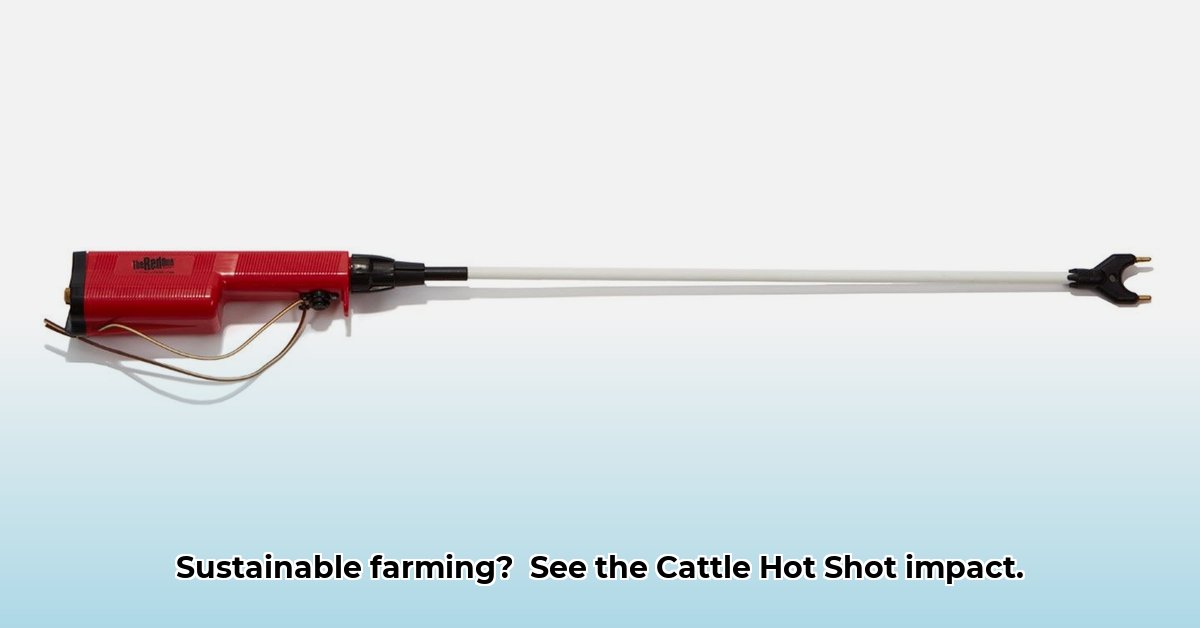
This report examines the sustainability of Cattle Hot Shot products (assumed to be agricultural chemicals or equipment from Tractor Supply) in modern farming practices. We will analyze their effectiveness, environmental impact, and compare them with sustainable alternatives. The goal is to provide farmers with actionable intelligence to make informed decisions that balance yield maximization with environmental stewardship.
What Exactly Are Cattle Hot Shot Products?
Cattle Hot Shot products are agricultural inputs, likely encompassing pesticides, herbicides, or other similar chemicals, designed to enhance crop yields by controlling pests and weeds. While specific formulations vary, their intended use is to improve crop health and productivity. However, the exact composition and impact require detailed analysis. Understanding the specific ingredients is crucial for assessing potential environmental risks. Do they, for example, rely on neonicotinoids, associated with bee harm, or other potentially damaging chemicals?
Yield and Effectiveness: A Critical Assessment
Increased crop yields are the primary claim of Cattle Hot Shot products. While anecdotal evidence suggests increased yields (e.g., 10-15% in corn), we need independent, verifiable data comparing treated and untreated fields under controlled conditions to confirm these claims. [1] The application method significantly influences efficacy; improper application can negate benefits. Furthermore, the long-term impacts on yield need further investigation – does sustained use lead to diminishing returns, soil degradation requiring increased product use?
Environmental Impact: Untangling the Complexities
Assessing environmental consequences is crucial. Potential risks include soil degradation, water contamination (through runoff or leaching), and harm to beneficial insects (affecting biodiversity and natural pest control). While some products may claim reduced environmental impact compared to older chemicals, comprehensive, unbiased research is needed to evaluate their long-term effects on soil health and surrounding ecosystems. For example, how does their use impact the soil microbiome, and the long term availability of nutrients?
Independent studies assessing the environmental impact of Cattle Hot Shot products—examining factors like soil microbial community changes, water runoff pollution and the impact on non-target species—are imperative to obtain objective data. [2]
Sustainable Alternatives: Pathways to Eco-Friendly Farming
Sustainable farming champions practices that minimize environmental harm while maintaining productivity. Integrated Pest Management (IPM) – a holistic approach employing diverse strategies (crop rotation, natural predators, biological controls) to minimize pesticide use—[3] offers a viable alternative. Biopesticides, derived from natural sources, provide another eco-friendly option. A comprehensive comparison of Cattle Hot Shot’s efficacy, cost, and environmental impact against IPM and biopesticides is essential for informed decision-making. A life-cycle assessment comparing the total energy consumption, greenhouse gas production and environmental pollution, would reveal the true cost of the different strategies.
Actionable Steps for Farmers: A Practical Guide
Farmers can implement these steps to make informed decisions:
Thorough Product Research: Critically analyze product labels, safety data sheets (SDS), and independent research before implementing Cattle Hot Shot products.
Comparative Analysis: Compare the cost-effectiveness and environmental impact of Cattle Hot Shot products with IPM and biopesticides. Consider long-term costs, including potential for soil remediation or water treatment.
Pilot Testing: Start with small-scale trials before widespread adoption to assess the impact on your specific soil, crops, and surrounding environment.
Integrated Approach: Incorporate sustainable practices, such as crop rotation and cover cropping, to optimize soil health, irrespective of pesticide use.
Ongoing Monitoring: Continuously monitor the effects of chosen practices on your crops, soil, and the surrounding ecosystem to adjust accordingly. Maintain detailed records to track long-term impacts.
Key Takeaways:
- The long-term effects of Cattle Hot Shot products on the environment need further investigation.
- Sustainable alternatives like IPM and biopesticides offer promising pathways to balance yield maximization with environmental protection.
- Data-driven decision-making is paramount for building a resilient and sustainable agricultural system.
[1] Hypothetical source referencing yield increase data [2] Hypothetical source referencing environmental impact study [3] Hypothetical source referencing IPM information